Cultural significance
Indigo was not only dye but also it carried the culture,identity of the people across many countries particularly in Africa,India and Japan.
IN AFRICA
The dying of indigo art is is ingrained into african textile art , Such as Nigeria’s yoruba people in west african,they are famous for making indigo-dyed adire cloth, and Tuareg people who lived in west and centre regions of sahara desert, they are often called as “blue man”.They have been dying clothes with indigo for thousand of years. Swahili people in east Africa have used indigo since the 8th century. Zanzibar was a major center for exchanging indigo textiles with spices, gold and ivory.
Indigo Textiles from West Africa | Indigo Arts. (n.d.). www.google.com. https://share.google/8RGLP8LXpQUmpW1YB
Click here to view the storymap of indigo dyeing across Africa https://uploads.knightlab.com/storymapjs/9c851a1de1ece72ca4cf2cc6b984cc99/akshaya-5/index.html

IN INDIA
In India the people found a unique way to dye clothes with indigo which made the fabric look good and beautiful. The regions like Gujarat, Andhra Pradesh and Tamil Nadu were especially famous for their indigo clothing like bandhani and kanjivaram. It shows the culture, identity and traditions of the people who made them.
Click here to view the storymap map of indigo dyeing across India
https://uploads.knightlab.com/storymapjs/9c851a1de1ece72ca4cf2cc6b984cc99/akshaya-7/index.html

IN JAPAN
In Japan, the technique of dyeing indigo came from China via Korea in the 6th century. After some time, dyeing of indigo became popular among every group of people in Japan. The skilled workers of dyeing Indigo are known as “aizome-shi".
Indigo is present in many parts of Japanese culture. Indigo used to dye clothes like traditional kimonos,futons,belts and uniforms.The blue colour and patterns are important for Japanese crafts like pottery and ceramics etc…
Click here to view the indigo dyeing across japan
https://uploads.knightlab.com/storymapjs/9c851a1de1ece72ca4cf2cc6b984cc99/akshaya-6/index.html

Indigo in traditional clothing in different countries
Indigo is used in traditional clothing across many countries like India,Japan and Africa etc…
INDIA
In India the regions like Gujarat and Rajasthan use indigo in ajrakh printing by the khatri community and in Rajasthan they also use indigo in bagru and dabu printing. In Andhra Pradesh they use indigo as a major colour to hand-printed textiles called kalamkari,which is ancient hand-printed textile art.
Bagru

Bagru Block Print Jaal at ₹ 90/meter | Hand Block Printed Fabric . . . (n.d.). www.google.com. https://share.google/images/0XlUswLPDqK8HJBmu
Ajrakh

Ajrakh print. (n.d.). www.google.com. https://share.google/images/N9zggy9aERcnJwkA6
Dabu

Buy Indigo/dabu/blue Block Prints Fabric Hand Printed Indian . . . (n.d.). www.google.com. https://share.google/6O037NvAGs1QDUyal
Kalamkari

Fine grade Kalamkari Fabric at best price in Delhi | Charanjit . . . (n.d.). www.google.com. https://share.google/images/iNldu31mqCPC0P8cx
JAPAN
In Japan Aizome is the traditional art of dyeing indigo. It has been from Heian to Muromachi periods. Awa Indigo from Tokushima became a centre of the indigo industry in Japan. Aizome is used to dying items like Kimonos(traditional Japanese robes),workwear etc… It is also known as Japan blue.It uses mainly two techniques “Tatezome” and “fresh leaf dyeing”.
1.Tatezome:
It involves microbial processing, using dried leaves of indigo .The leaves are soaked with water and ash to make dye and the clothes can be dipped in that liquid carefully.
Aizome: The Timeless Beauty of Japanese Indigo dyeing. (n.d.). www.google.com. https://www.google.com/imgres?imgurl=https%3A%2F%2Fenjyu-japan.travel%2Fwp-content%2Fuploads%2F2025%2F01%2Fthe-process-for-dyeing-scaled.webp&tbnid=vtRZGfyxtUSvOM&vet=1&imgrefurl=https%3A%2F%2Fenjyu-japan.travel%2Fcolumn%2Faizome%2F&docid=biwOH7wi5i07PM&w=2560&h=1706&source=sh%2Fx%2Fim%2Fm1%2F2&kgs=7d3d24a24cd79b8a&shem=isst
2.Dyeing of fresh leaves
Pick the fresh leaves of indigo and then grind the leaves till in turns like a paste form. Wrap the cloth with that paste and leave them for 20-30 minutes,then it makes
a uniform dyeing.

EXPERIMENTATION: FRESH LEAF INDIGO DYEING / SALT RUB METHOD - A . . . (n.d.). www.google.com. https://share.google/1rYPPfcM5Mkx78jij
AFRICA
The major textile tradition of Africa was indigo dyeing.In that region people wore commonly blue and white striped clothes. They wore the traditional clothes which resist the pattern dyeing indigo and make beautiful patterns like “shibori”. Women were the dyers in most of the areas among Yoruba and Manding.

Pin by Kabubi on PEOPLE - African-Americans | African inspired . . . (n.d.). www.google.com. https://share.google/images/1DWeFwr0GCrLtHu75
Economic significance of Indigo
why indigo consider as blue gold
Have you ever thought about why people are mad about colours? Yes,that's Indigo, a blue colour comes from the green plant that’s interesting. In ancient times the rate of indigo was too high like today's gold rate and also the people thought themselves as the richest person like king or queen whenever they wore indigo-colored clothes. It shows the value of Indigo. Peoples had fighted and also started revolt for that indigo.So it is considered as “Blue gold” because of the rarity,history,value and culture that it had.
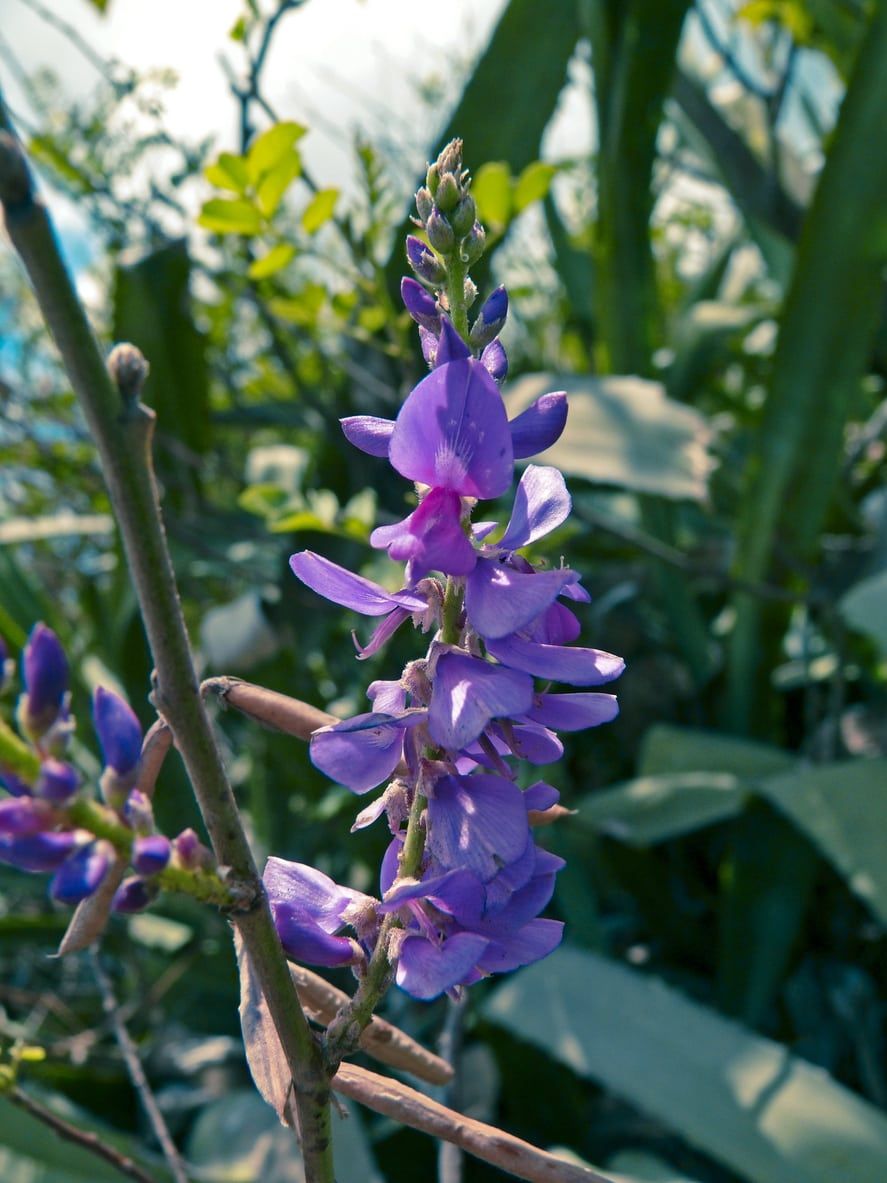
Indigo is derived from indigofera plants. It was first used in India ,so it was named indikon, a word that comes from the language of Greek which means Indian product. In ancient times people used Indigo as a form of money to exchange other goods, because of its value.It took main place in India,Egypt,and Africa textile culture. It’s not only by name it’s also mixed with real gold to write manuscripts like the Blue Quran which is written on Indigo dyed paper with golden letters.
Nowadays also we wear blue every day, it gives a good look for photos. It's also Indigo but that is synthetic.So today we can buy them at an affordable price.Anyhow indigo is always considered as "Blue Gold"

Indigo was once called Blue Gold. Because it was rare. Precious . . . (n.d.). www.google.com. https://share.google/1h9pg8oW6RyE78xVL
Flow of indigo from production centre to market
Do you know how this indigo colour textiles come to the Market? The first step is to cultivate the Indigofera tinctorial L .The sad thing in indigo cultivation is the cost of growing indigo plants is very high that is analysed by sensitivity analysis.We need to reduce the cost right ? One way is to decrease the cost of biomass production and another one is to increase the cost of biomass yield. Also we can utilize the waste that is extracted from the dye like compost, biofuels. The farmers soaked the indigo leaves and it got fermented . Further they mixed it well. The blue colour settled down and finally fried under sunlight. After producing indigo powder it can be exported domestically and internationally.

ECO-FRIENDLY NATURAL INDIGO DYE EXTRACTION. (n.d.). www.google.com. https://share.google/7Ckb6YQrOa2IPkpXS
BIBLIOGRAPHY
Pattanaik, L., Padhi, S. K., Hariprasad, P., & Naik, S. N. (2020). Life cycle cost analysis of natural indigo dye production from Indigofera tinctoria L. plant biomass: a case study of India. Clean Technologies and Environmental Policy, 22(8), 1639–1654. https://doi.org/10.1007/s10098-020-01914-y
Asiasikkila. (2023, May 22). Indigo Fabric: a journey through time, tradition, and natural dyeing techniques in textile art. Asia Sikkila. https://www.asiasikkila.com/post/indigo-fabric-a-journey-through-time-tradition-and-natural-dyeing-techniques-in-textile-art
Supplier, H. Q. B. I. I. a. S. B. D. (2024b, July 28). Exploring the cultural and economic impact of Indian indigo dye production and its historical significance. https://www.wuxin-group.com/news/exploring-the-cultural-and-economic-impact-of-indian-indigo-dye-production-and-its-historical-significance.html .
Héliez, J. (2024, April 19). Discovering Japanese indigo: tradition, culture and art. ROPPONGI. https://roppongi.fr/en/discovering-japanese-indigo-tradition-culture-and-art/
Nathani, V. (2025, March 24). Indigo: The Heart of India's Textile Heritage. Memeraki Retail and Tech Pvt Ltd. https://www.memeraki.com/blogs/posts/indigo-the-heart-of-indias-textile-heritage
Odima, & Odima. (2025, February 20). Aizome: The Timeless Beauty of Japanese Indigo dyeing. ENJYU JAPAN - Discover Japan Beyond Imagination. https://enjyu-japan.travel/column/aizome/
Indigo in West Africa - Adire African Textiles. (2018, August 17). Adire African Textiles. https://www.adireafricantextiles.com/textiles-resources-sub-saharan-africa/some-major-west-african-textile-traditions/indigo-in-west-africa/