INDIGO: THE BLUE GOLD RUSH
Introduction to Indigo
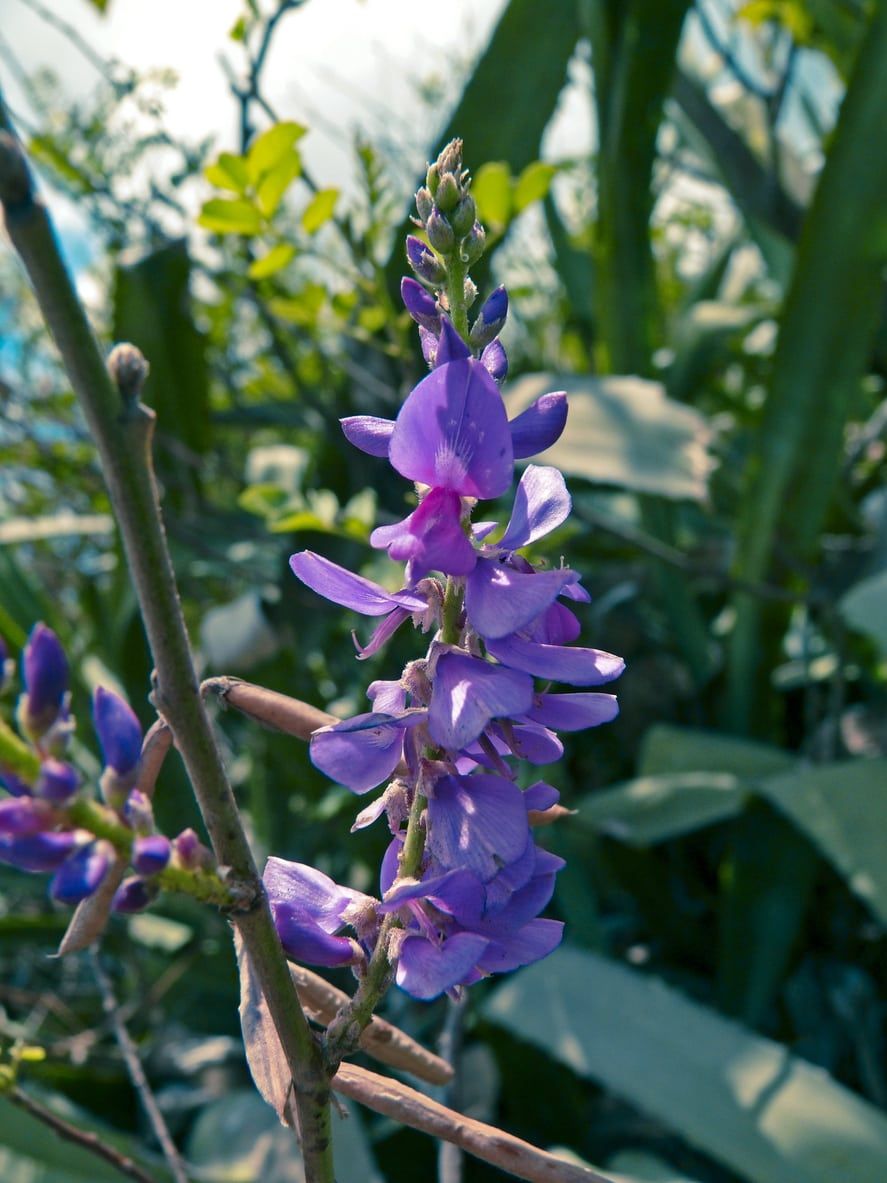
Indigo is a term used for various shades of blue. This term refers to the color of the Indigo dye. It is also seen in the rainbow. Indigo is derived from a Latin word, i.e. indicum which means Indian, this natural Indigo dye is exported from India to Europe.

https://cdn.mos.cms.futurecdn.net/ufMhRvv6RoEdAArN5WtW3a-887-80.jpg
Discovery of indigo
The Indigo dye was discovered in Huaca Prieta, Peru around 6000 years ago. Indigo is being used by many countries such as India, China, Japan, Southeast Asia. Indigo dye was also being used in historical civilizations such as Egypt and Mesopotamia, Britain, Iran, West Africa.
Indigo is being started cultivating in India, it used to be the luxury product for Greeks and Romans. India was the main provider of indigo to Europe.
The Blue Gold
The blue gold is being cultivated in south India by the farmers especially in Tamil Nadu. Where it was cultivated for a longer period. During British rule, the farmers were forced to grow indigo which led to the indigo revolt of 1859, in which the farmers also started to protest the British.

The origin of indigo in India
The indigo in India was started at the time of Indus Valley Civilization around 2500-1500 BCE. During the British East India company rule India was the major exported of indigo to Europe. When the cultivation of indigo became very important, the farmers of Bengal and Bihar were forced to grow indigo.

https://www.patralok.com/wp-content/uploads/2025/06/the-east-india-company-trade-c.-1800.png
Flow of indigo trade from Indian subcontinent to the world
Around 5000 BCE people started growing a plant called Indigofera tinctoria in India and nearby places. By the 2nd and 3rd centuries, the flow of indigo to Europe started with animals such as oxen, camels and horses.
During the 16th century the Portuguese found a direct sea route to India. This made the indigo trade easier. Around the 18th century the indigo trade started flowing everywhere. Indigo is being transported to Agra to Lahore and Kabul and then to Egypt and the East by Land routes. Sea routes carried indigo from Indian ports such as Surat, Dhaka, Chittagong, Balasore to Europe, Africa, China, Vietnam.
Decline of natural indigo
There was a significant decline in natural indigo around the 20th century. This was due to the increase in demand for synthetic indigo; this happened around the 19th century. This made the production of indigo really very important for the economy.
Story Map
BIBLIOGRAPHY
Wikipedia contributors. (2025, September 28). Indigo - Wikipedia.
https://en.wikipedia.org/w/index.php?title=Indigo&oldid=1313797700
Wikipedia contributors. (2025a, September 1). Indigo dye - Wikipedia.
https://en.wikipedia.org/w/index.php?title=Indigo_dye&oldid=1309060008
Yadav, I. (n.d.). Forget me not - on the indigo route - tracking the story of the bewitching
blue dye.
https://forgetmenot.objettemoin.org/index.php/en/workshop-news/55-on-the-indigo-rout
-tracking-the-story-of-the-bewitching-blue-dye-2.
Gilon, C. (2020, December 13). Indigo: The story of India’s ‘blue gold.’ Al Jazeera.
https://www.aljazeera.com/features/2020/12/13/indigo-and-the-story-of-indias-blue-gold
[Solved] Indigo cultivation in India declined by the beginning of the. (2025, September
29). Testbook.
https://testbook.com/question-answer/indigo-cultivation-in-india-declined-by-the-beginn




No comments:
Post a Comment